

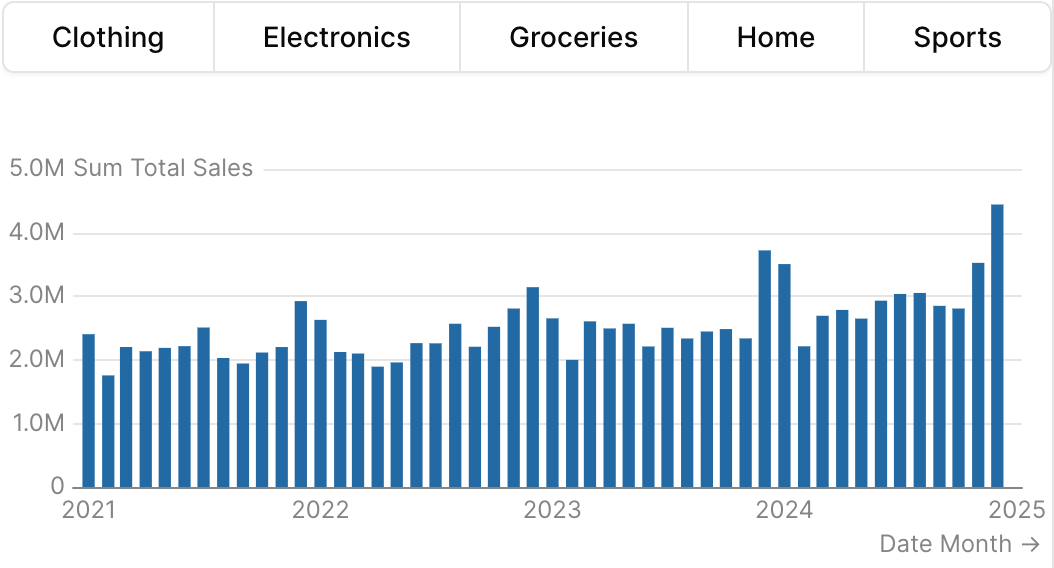
Examples
Using filters
Using where

Using Inline SQL
Vertical orientation inside a row
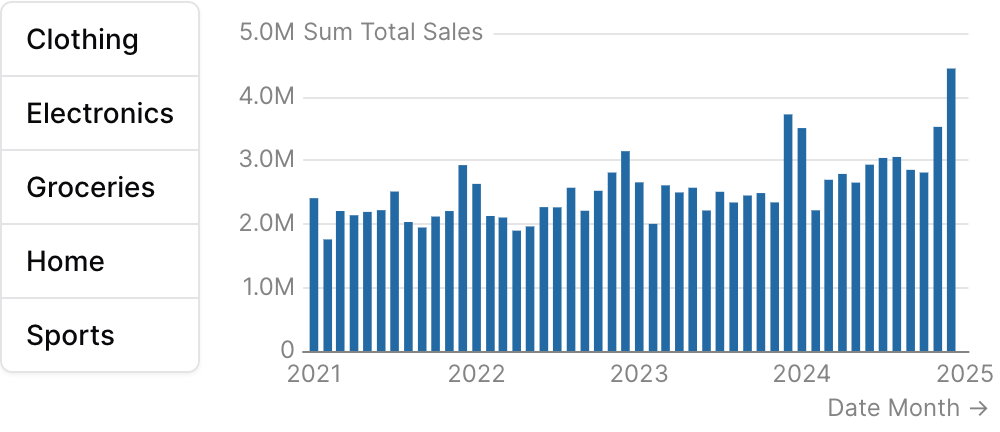
Attributes
string
required
The id of the button group to be used in a
filters propstring
Name of the table to query
array
Array of filter IDs to apply when querying for options
string
Column name to use as the value for each option, and the column to filter by when this button group’s
id is used in the filters prop of a chartstring
Column name to use as the label for each option
string
Text displayed above the button group
string
Information tooltip text
string | number | array
Initial selected value(s)
boolean
default:"false"
Allows multiple selections
boolean
default:"false"
Automatically select the first option when the component loads
string
default:"horizontal"
Layout direction of the button group. Use “vertical” to stack buttons in a column. Best paired with a sibling element inside a
row so the stack sits alongside its target content.Allowed values:horizontalvertical
number
Maximum height in pixels for the button stack when
orientation="vertical". Buttons scroll if the list overflows. Ignored when horizontal.string
Column name(s) with optional direction (e.g. “column_name”, “column_name desc”)
string
Custom SQL WHERE condition to apply to the query. For date filters, use date_range instead.
options group
Filter data to a time period. Attributes:
date_range is an OBJECT with range (the period) and optionally date (which column to filter on when the table has more than one). Shape: date_range={ range="last 12 months" date="order_date" }. range accepts predefined values (last 7 days, month to date), dynamic patterns (Last 90 days), custom windows (2020-01-01 to 2023-03-01), or partial ranges (from 2020-01-01, until 2023-03-01). Pass a plain string for range — the whole object is NOT a string.Example:- range:
string- Time period to filter. Use presets like ‘last 7 days’, dynamic patterns like ‘Last 90 days’, custom ranges like ‘2020-01-01 to 2023-03-01’, or partial ranges like ‘from 2020-01-01’.- Allowed values:
todayyesterdaylast 7 dayslast 30 dayslast 3 monthslast 6 monthslast 12 monthsprevious weekprevious monthprevious quarterprevious yearthis weekthis monththis quarterthis yearnext weeknext monthnext quarternext yearweek to datemonth to datequarter to dateyear to dateall time
- Allowed values:
- date:
string- Date column to filter on. Required when the data has multiple date columns.
Using the Filter Variable
Reference this filter using{{filter_id}}. The value returned depends on where you use it.
The examples below show values for three scenarios:
- No selection
- Single select: “Electronics” selected
- Multi select: “Sports” and “Home” selected (when
multiple=true)
Available Properties
You can also access specific properties using{{filter_id.property}}:
.filter
Returns a complete SQL filter expression ready to use in WHERE clauses. Returnstrue when no value is selected.